
AnswerModular kitchen
What is a modular kitchen and what materials and types are used?
What a modular kitchen is, how MDF, plywood and HDHMR compare, and finishes, layouts and durability for Faridabad kitchens explained.
17 checks · 6 stages
Reviewed by team
Updated 7 min read
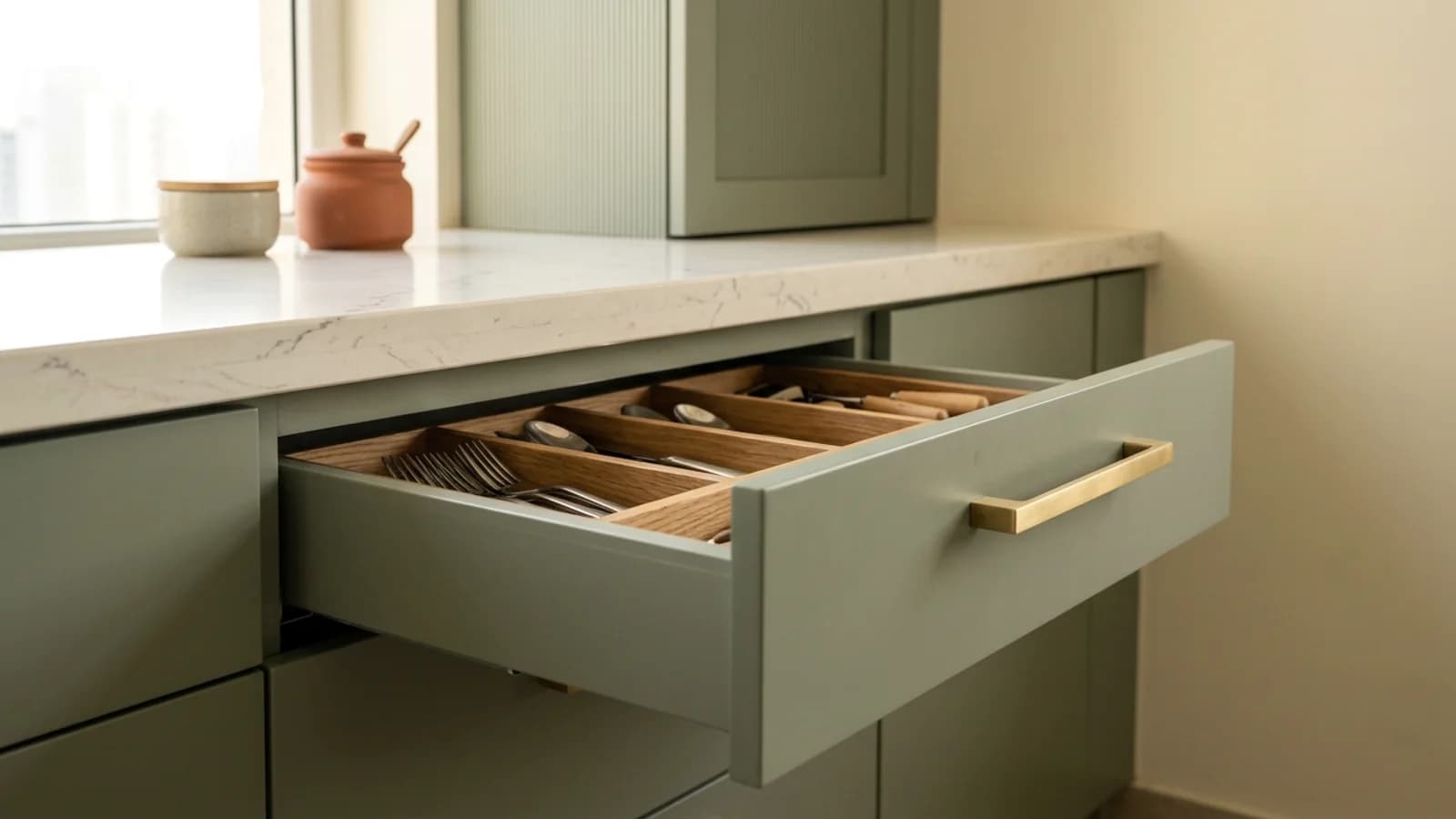
Quick answer
 Quick answer
A modular kitchen is a set of factory-made cabinet units, built to standard sizes and put together on site. A carpenter-built kitchen is made part by part at home instead. In Faridabad homes, cabinets often use MDF, plywood or HDHMR board. These differ mainly in moisture resistance. Laminate and acrylic are finishes applied over these boards, not separate materials.
Key facts
- MDF standard
- IS 12406 (medium density fibre boards for general purposes)
- Laminate finish standard
- IS 2046 (decorative thermosetting synthetic resin bonded laminated sheets)
- BWP (marine) plywood standard
- IS 710 (marine plywood)
How is a modular kitchen different from a traditional carpenter-built kitchen?
A modular kitchen uses pre-made cabinet units. These are cut in a factory and put together on site. A traditional kitchen is built part by part. A carpenter works at home with solid wood or site-cut plywood.
Traditional kitchens often have no fixed board grade or finish. Each piece is cut and joined on site. The hardware depends on what the carpenter can find locally.
Ask whether the studio's units are made in a factory or cut on site. Factory-made units usually fit better and finish more evenly, since machines do the cuts and edge banding.
Why do modular kitchens cost more than a carpenter-built kitchen?
Modular kitchens cost more mainly because of the boards, the branded hardware and the finish, not just labour. Factory-cut BWR or BWP plywood and HDHMR board add cost. So do soft-close hinges, drawer channels, and laminate, acrylic or PU finishes. These all show up as line items on a quote.
A separate answer on this site gives a full breakdown of cost per square foot. Another answer covers whether the extra cost is worth it compared with a carpenter-built kitchen.
- Ask for the hardware brand and model by name, not just "branded hardware"
- Ask for the board grade by name, for example BWR plywood to IS 303 or HDHMR, not just "ply"
Which material is best for cabinets: MDF, plywood or HDHMR?
No single material suits every cabinet. The right choice depends on where it sits in the kitchen. MDF, made to IS 12406, has a smooth surface that takes paint well. But it swells when wet, so it suits painted shutters, not base units near water.
BWP (marine) plywood, made to IS 710, resists boiling water and repeated wetting. This makes it the right choice for sink units and other wet areas. HDHMR board is dense and handles splashes well once its edges are sealed. It costs less than plywood but more than MDF, and works well for shutters and general cabinets.
The comparison table on this page sets these three side by side. The plywood-for-kitchens answer covers plywood grades in more detail. The MDF glossary entry explains that material further.
- MDF (IS 12406): smooth, paints well, swells when wet, suited to painted shutters
- BWP (marine) plywood (IS 710): very high moisture resistance, suited to sink units and bathrooms
- HDHMR board: dense, good moisture resistance, medium cost, needs sealed edges and support on long shelves
What should a kitchen countertop and cabinet finish be made of?
Laminate and acrylic are the two common finishes applied over cabinet boards. They are not materials in themselves. Laminate, made to IS 2046, resists scratches well, wipes clean easily and costs less. This suits most kitchens and wardrobes.
Acrylic gives a high-gloss, mirror-like look. It shows fine scratches more easily and costs more than laminate. It suits shutter fronts where a glossy finish matters more than low upkeep.
Granite, quartz, marble and stainless steel are countertop materials commonly seen in the market. InteriorIQ's cost data for these sits on the price pages, not here. Check the quotation checklist on this page to confirm the finish sheet's thickness and brand are named on the quote.
What layouts are common and how well do modular kitchens handle water and wear over time?
Straight, L-shaped, U-shaped and parallel layouts are the common modular kitchen designs. The choice depends on the room's size and shape, not on one layout being better than the rest.
Water handling depends on the board chosen. BWP plywood and HDHMR board resist moisture well. Plain MDF and particleboard swell when they get wet. Longevity also depends on edge banding covering every exposed edge, and on using the correct hardware. Both are covered in the carcass and shutter stages of the checklist on this page.
Inspect the edge banding closely around the sink cabinet when the kitchen is installed. This is the most common point where water gets in and damages the board underneath.
- Straight: fits narrow kitchens or single-wall layouts
- L-shaped: fits corner spaces, common in mid-size apartments
- U-shaped: fits larger kitchens with more counter space
- Parallel: fits galley-style kitchens with two facing walls
Checklist
Modular kitchen quotation - line items to check
17 checks · 6 stages
Carcass (the cabinet boxes)
How to check: The quote names the brand and grade, not just "ply"
How to check: Each part has its own thickness on the quote
How to check: Edge-band material and thickness are listed
Shutters and finish
How to check: Brand and thickness of the finish sheet are listed
How to check: Core and finish are listed separately
How to check: The model or a picture is attached
Hardware
How to check: Brand and model are written, not "branded hardware"
How to check: Each drawer size has its own channel line
How to check: No line reads "accessories as required"
Countertop and backsplash
How to check: Granite or quartz, its thickness and the edge profile are named
How to check: Included or excluded, in writing
Appliances, sink and site work
How to check: Each appliance is a separate line or clearly excluded
How to check: The quote says whether site work is included
How to check: Listed as included or charged separately
Warranty, timeline and payments
How to check: In writing, per part
How to check: A date or number of weeks from the design sign-off
How to check: The last payment falls after installation and snag fixing
Frequently asked questions
What is the average price of a modular kitchen in India?
Modular kitchen cost in India varies a lot by city, layout length, board material and finish. There is no single average figure that fits every home. InteriorIQ's price-per-square-foot answer breaks down cost by layout and material, so you can see where the money goes. InteriorIQ's rate card gives an exact range once you share your kitchen size on WhatsApp.
What is the difference between wooden and aluminium modular kitchens?
Wooden boards like plywood, MDF and HDHMR are more common in Indian kitchens. They take laminate, acrylic or PU finishes well and give a warmer look. Aluminium profile shutters resist moisture strongly and suit humid or coastal homes, but cost more and offer fewer finish options. The comparison table on this page covers moisture resistance and typical use for the wood-based boards.
How long do modular kitchens last?
A modular kitchen built with BWP plywood or HDHMR, sealed edges and good hardware typically lasts fifteen to twenty years with normal use. Boards near the sink and dishwasher wear faster if edge banding is missing. Check that every exposed edge is band-sealed on the quote before work starts.
Is a modular kitchen a good or bad choice?
A modular kitchen suits most Delhi NCR homes well. Factory-cut units fit standard sizes, install faster than carpenter work, and carry hardware warranties. Whether it is worth the extra cost over a carpenter-built kitchen depends on your budget and timeline. The dedicated worth-it answer on this site covers that in more detail.
What are the key differences between a modular kitchen and a traditional kitchen?
A modular kitchen uses factory-made cabinet units assembled on site. A traditional kitchen is built part by part by a carpenter at home. Modular units come with standard hardware warranties and faster installation. Traditional kitchens can be shaped more freely around odd corners. Material choice, such as MDF versus plywood, affects both equally.
Sources and methodology
- StandardIS 12406: Medium density fibre boards for general purposes (Bureau of Indian Standards)
- StandardIS 2046: Decorative thermosetting synthetic resin bonded laminated sheets (Bureau of Indian Standards)
- StandardIS 710: Marine plywood (Bureau of Indian Standards)
- MethodologyHow InteriorIQ researches and checks its guides
Related guides
Planned next · not drafted yet
- AnswerWhat is the best type of plywood for a kitchen in India/q/best-plywood-kitchen-india
- AnswerWhat are the types, thickness and price per square foot for modular ki/q/modular-kitchen-plywood-price-per-sq
- AnswerWho are the best modular kitchen manufacturers in Gurgaon/q/best-modular-kitchen-manufacturers-gurgaon
- AnswerIs a modular kitchen worth the investment/q/modular-kitchen-worth
- AnswerCheck your quote/tools/quote-check
- GlossaryWhat is MDF?/glossary/mdf
More in Modular kitchen
Checklist
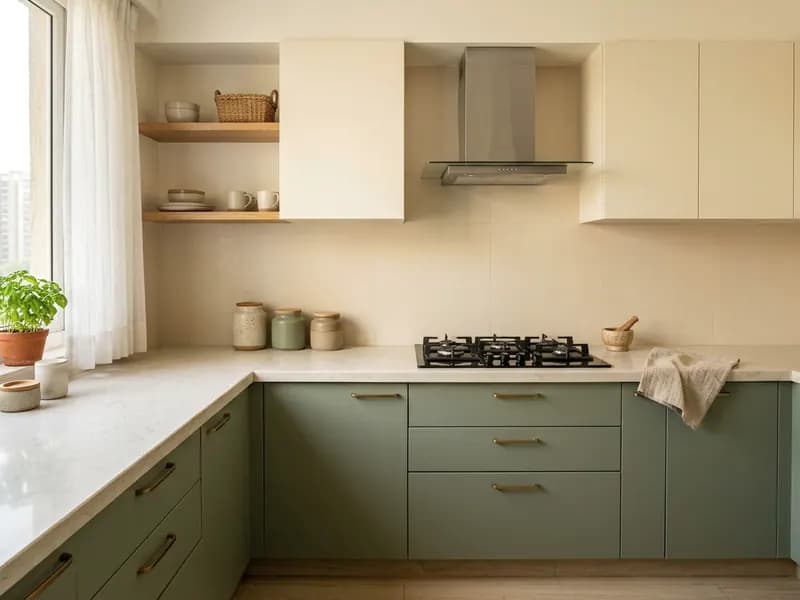
Modular kitchen installation time in Noida
A checklist of what changes a modular kitchen installation timeline in Noida, the order-to-handover steps, what to confirm beforehand and common FAQ.
Published 20 Oct 2026
Answer
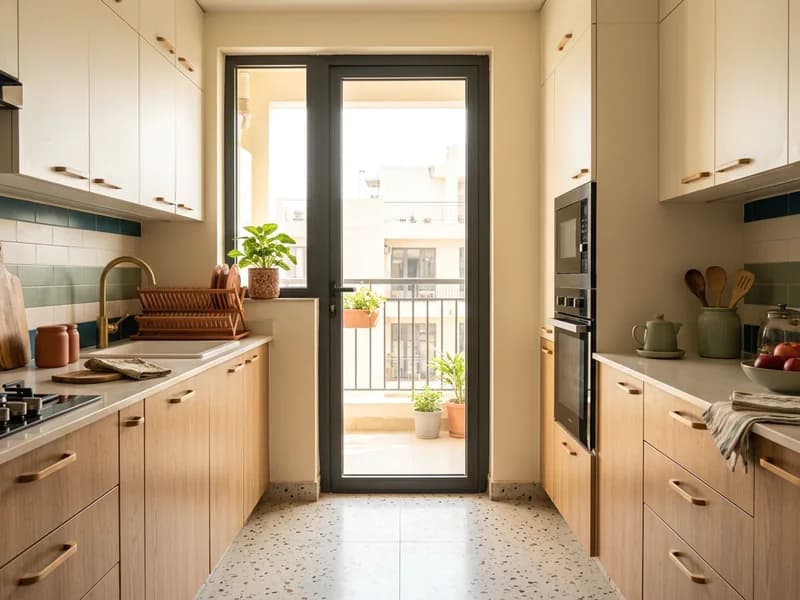
What is a parallel modular kitchen layout and how do you choose the design?
How a parallel modular kitchen differs from galley and L-shaped layouts, the aisle clearance needed, storage and island tips, finish choices and an FAQ.
Published 20 Oct 2026
Answer
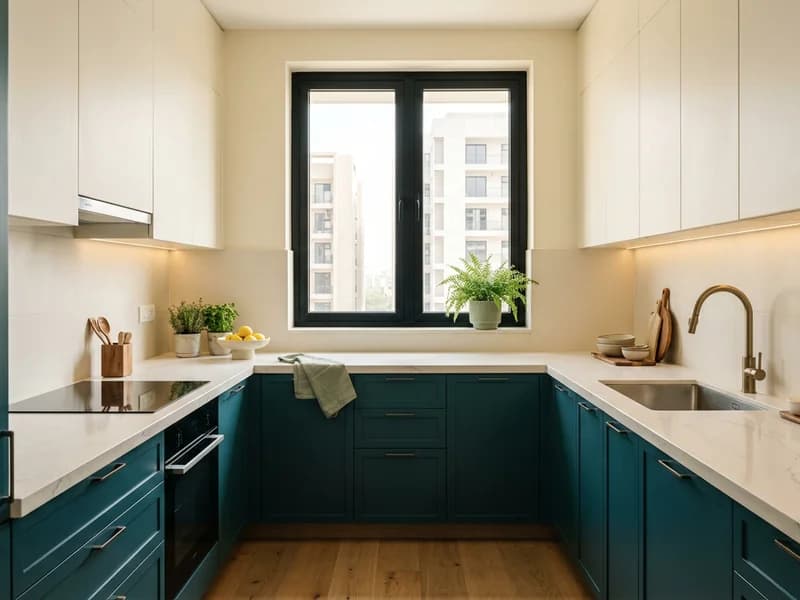
What is an L-shaped kitchen design layout and how do you avoid design mistakes?
What an L-shaped kitchen layout looks like, how it compares with U-shaped and straight designs, the golden triangle rule and corner storage mistakes to avoid.
Published 20 Oct 2026

Your companion
Not sure what to do next? Ask InteriorIQ
Ask about your kitchen, your wardrobe or a quote you received. You get a sourced answer with real prices, and a clear next step.